
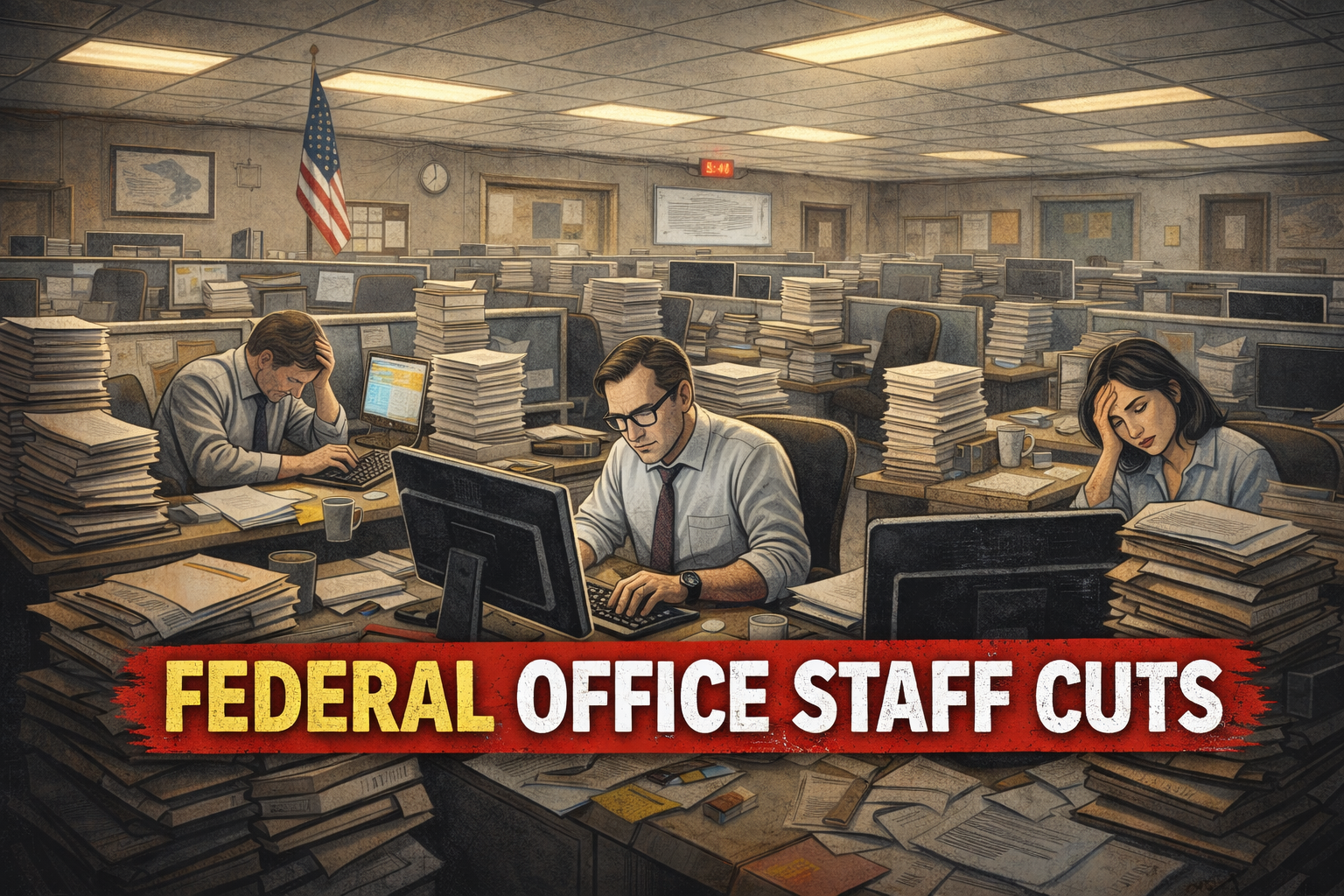
The push to cut the federal workforce is being sold as bold leadership and fiscal responsibility—but when you actually break down the numbers, it starts to look more like political theater than serious economic policy. Honestly, this is just dumb.

Let’s be clear: the total U.S. federal budget sits around $6–7 trillion annually. Federal civilian worker pay and benefits make up only about 5% or less of that total. That means even aggressive cuts to the workforce would save tens of billions, not trillions. In a budget of this size, that’s a relatively small dent. It does not meaningfully solve deficits, and it certainly doesn’t fix long-term fiscal challenges like entitlement costs or debt interest.

The real question behind the Trump Plan to Cut Federal Workforce is simple: are we fixing government, or just making it easier for it to fail?”
So what’s really happening here? You’re targeting one of the smaller slices of spending while ignoring the biggest drivers of the budget. That’s not efficiency—that’s misdirection.
And the consequences aren’t abstract. Federal workers are not just numbers on a spreadsheet. They are the people processing Social Security checks, managing veterans’ care, overseeing food safety, securing airports, and responding to disasters. When you cut staffing in these areas, you don’t just “trim fat”—you slow down services, increase wait times, and raise the risk of system failures.
There’s also a deeper issue: oversight. A functioning government depends on people who enforce rules, monitor systems, and prevent abuse. When you shrink the workforce too far, you weaken that oversight. Fewer inspectors, fewer regulators, fewer administrators—this creates gaps. And gaps get exploited. Whether it’s fraud, waste, or mismanagement, less staffing means fewer eyes on the system.
That’s why this approach raises serious concerns. It prioritizes the appearance of cutting government over the reality of governing effectively. It focuses on symbolic cuts rather than structural reform. And it risks undermining the very systems people rely on every day.
If the goal is real fiscal responsibility, then the focus should be on the largest drivers of spending, not one of the smallest. If the goal is efficiency, then cuts should be targeted and strategic—not broad reductions that weaken essential services.
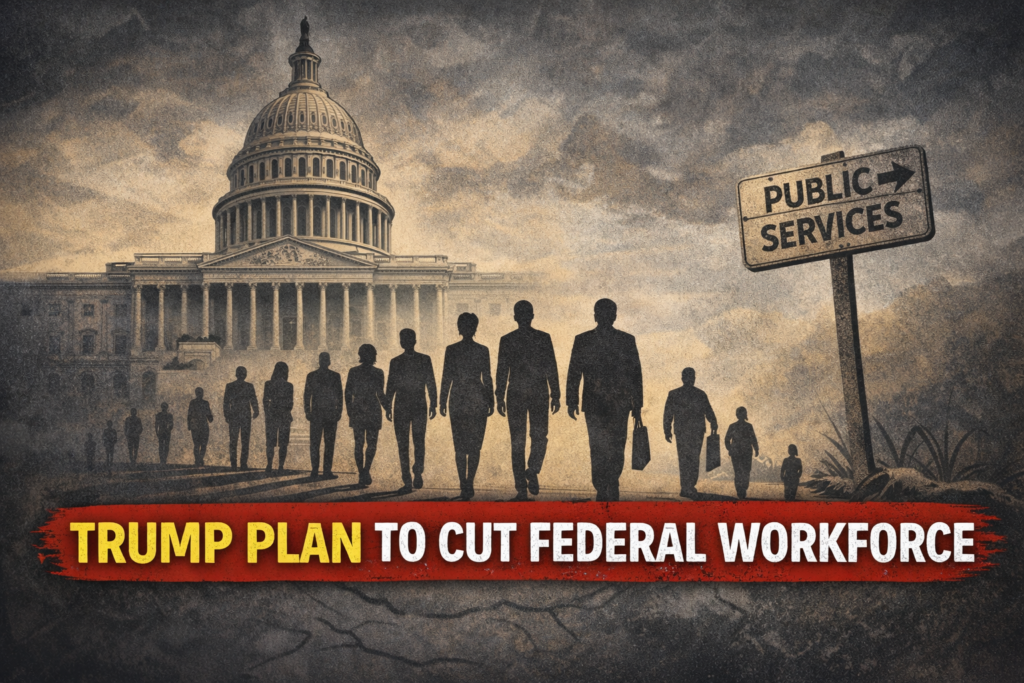
Right now, this plan looks less like a serious solution and more like a blunt instrument—one that creates disruption without delivering meaningful savings.
And that’s the core problem: it’s not just about making government smaller. It’s about whether it still works.

Related Articles
Latest Articles
-

Schumer’s Worst Nightmare: Why I’m Backing Chris Van Hollen for Democratic Leadership
I’m not gonna sit here and front like I know everything there is to know about Chris Van Hollen, because I don’t. I haven’t done quite enough research yet. But from what I’ve seen, I know I like him a whole lot more than Chuck Schumer. And if he has the backing of Bernie Sanders…
-
Midterms 2026: Democrats Won. Now What? Accountability Comes First
The midterms 2026 are over, but the real work is just beginning. It’s time to follow the money, demand transparency, investigate corruption, and make sure accountability isn’t just another campaign promise. The midterms 2026 have brought a new political conversation to Washington. But now that the votes have been cast, one question deserves serious attention:…
-
The White House Got Its Viral Clip. Did Anybody Get an Answer?
My Political Thoughts | Opinion by Kev Imagine a reporter asks whether a school lunch program is getting cut. The person at the podium cracks a joke, the reporter pushes back, and by dinner everybody’s reposting the clip like somebody won a fight. Cool. Now you’re at the kitchen table looking at next week’s grocery…