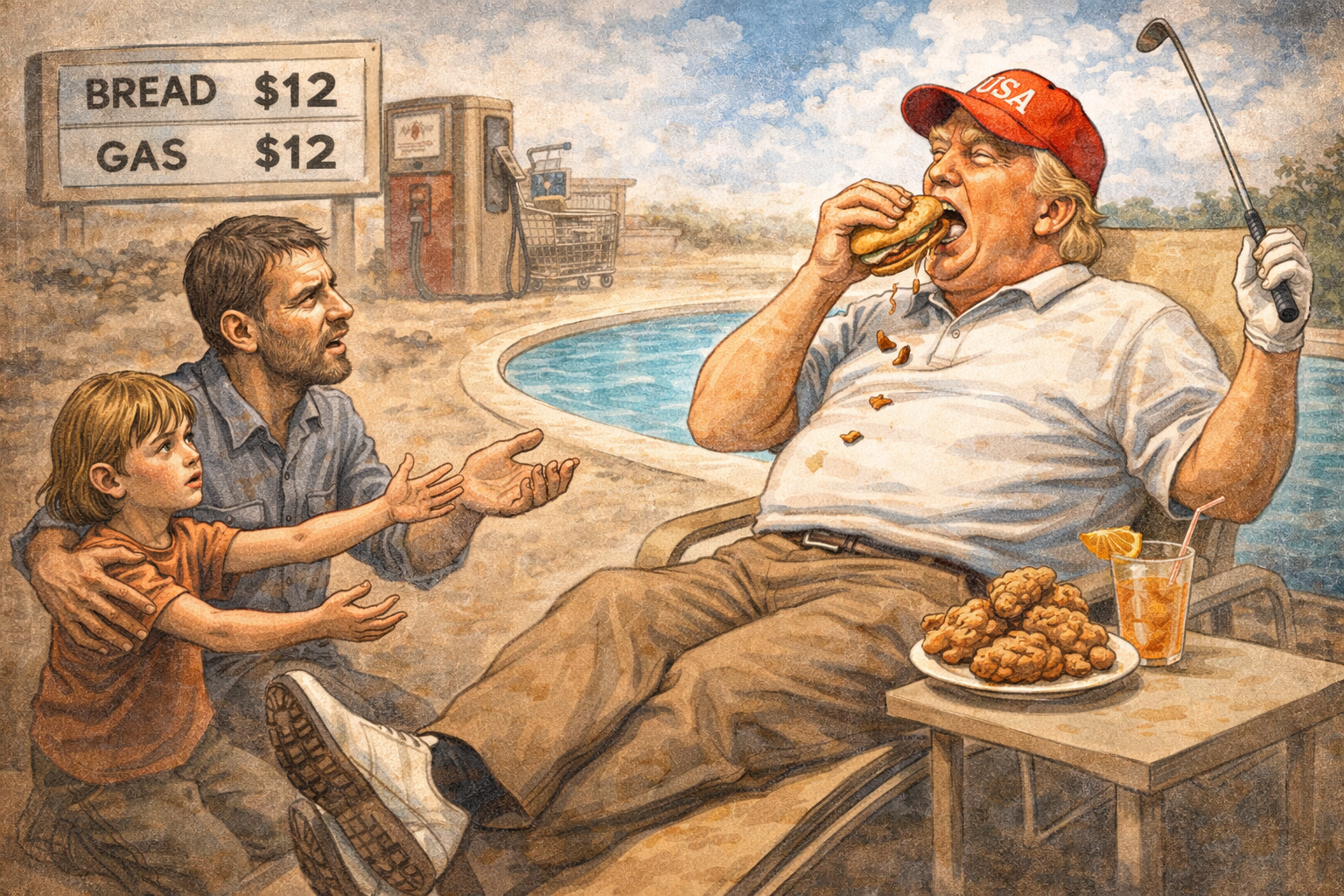

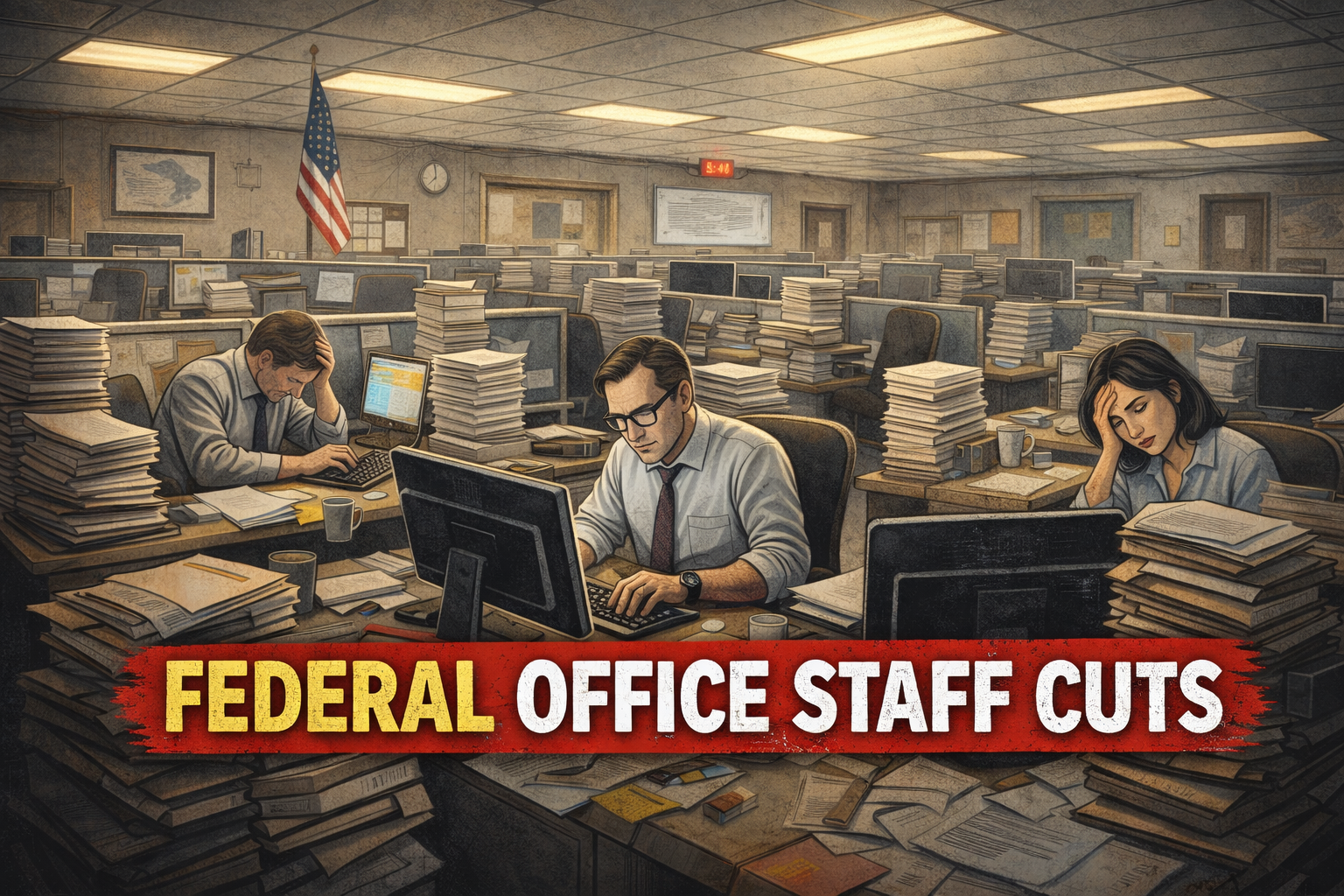
The push to cut the federal workforce is being sold as bold leadership and fiscal responsibility—but when you actually break down the numbers, it starts to look more like political theater than serious economic policy. Honestly, this is just dumb.

Let’s be clear: the total U.S. federal budget sits around $6–7 trillion annually. Federal civilian worker pay and benefits make up only about 5% or less of that total. That means even aggressive cuts to the workforce would save tens of billions, not trillions. In a budget of this size, that’s a relatively small dent. It does not meaningfully solve deficits, and it certainly doesn’t fix long-term fiscal challenges like entitlement costs or debt interest.

The real question behind the Trump Plan to Cut Federal Workforce is simple: are we fixing government, or just making it easier for it to fail?”
So what’s really happening here? You’re targeting one of the smaller slices of spending while ignoring the biggest drivers of the budget. That’s not efficiency—that’s misdirection.
And the consequences aren’t abstract. Federal workers are not just numbers on a spreadsheet. They are the people processing Social Security checks, managing veterans’ care, overseeing food safety, securing airports, and responding to disasters. When you cut staffing in these areas, you don’t just “trim fat”—you slow down services, increase wait times, and raise the risk of system failures.
There’s also a deeper issue: oversight. A functioning government depends on people who enforce rules, monitor systems, and prevent abuse. When you shrink the workforce too far, you weaken that oversight. Fewer inspectors, fewer regulators, fewer administrators—this creates gaps. And gaps get exploited. Whether it’s fraud, waste, or mismanagement, less staffing means fewer eyes on the system.
That’s why this approach raises serious concerns. It prioritizes the appearance of cutting government over the reality of governing effectively. It focuses on symbolic cuts rather than structural reform. And it risks undermining the very systems people rely on every day.
If the goal is real fiscal responsibility, then the focus should be on the largest drivers of spending, not one of the smallest. If the goal is efficiency, then cuts should be targeted and strategic—not broad reductions that weaken essential services.
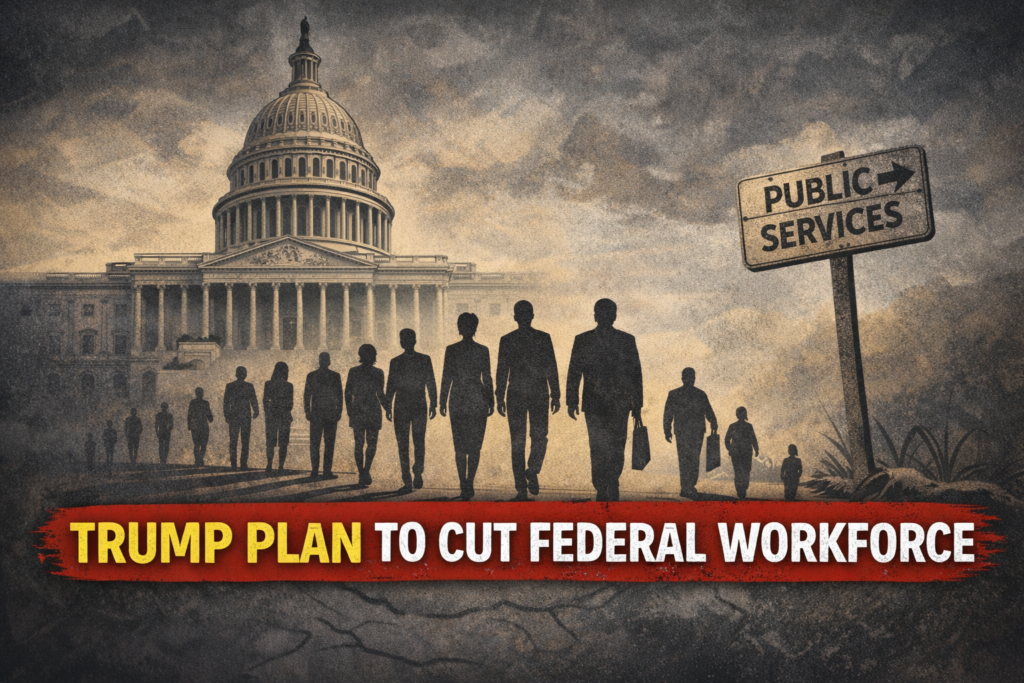
Right now, this plan looks less like a serious solution and more like a blunt instrument—one that creates disruption without delivering meaningful savings.
And that’s the core problem: it’s not just about making government smaller. It’s about whether it still works.

Related Articles
Latest Articles
-

Hip-Hop Must Speak Up: Why the 2026 Midterms Are About Justice, Safety and Survival
The hip-hop community has a powerful voice in America. Hip-hop is no longer just music. It is a culture, a way of life and one of the most influential ways to reach the masses. From its beginning, hip-hop has told stories about poverty, policing, inequality, racism and survival. It gave a microphone to communities that…
-
Trump Plan to Cut Federal Workforce : Why Critics Are Sounding the Alarm
The push to cut the federal workforce is being sold as bold leadership and fiscal responsibility—but when you actually break down the numbers, it starts to look more like political theater than serious economic policy. Honestly, this is just dumb. Let’s be clear: the total U.S. federal budget sits around $6–7 trillion annually. Federal civilian…
-

Jay Z & Roc Nation Got This One Wrong: Battle Rap Still Moves the Culture
When jay z nation starts acting like battle rap is some dirty part of hip-hop we should leave behind, I gotta push back. Nah. That take is too soft, too clean, and too far removed from what this culture really is. Jay-Z said in his March 2026 GQ interview that he does not know if…