
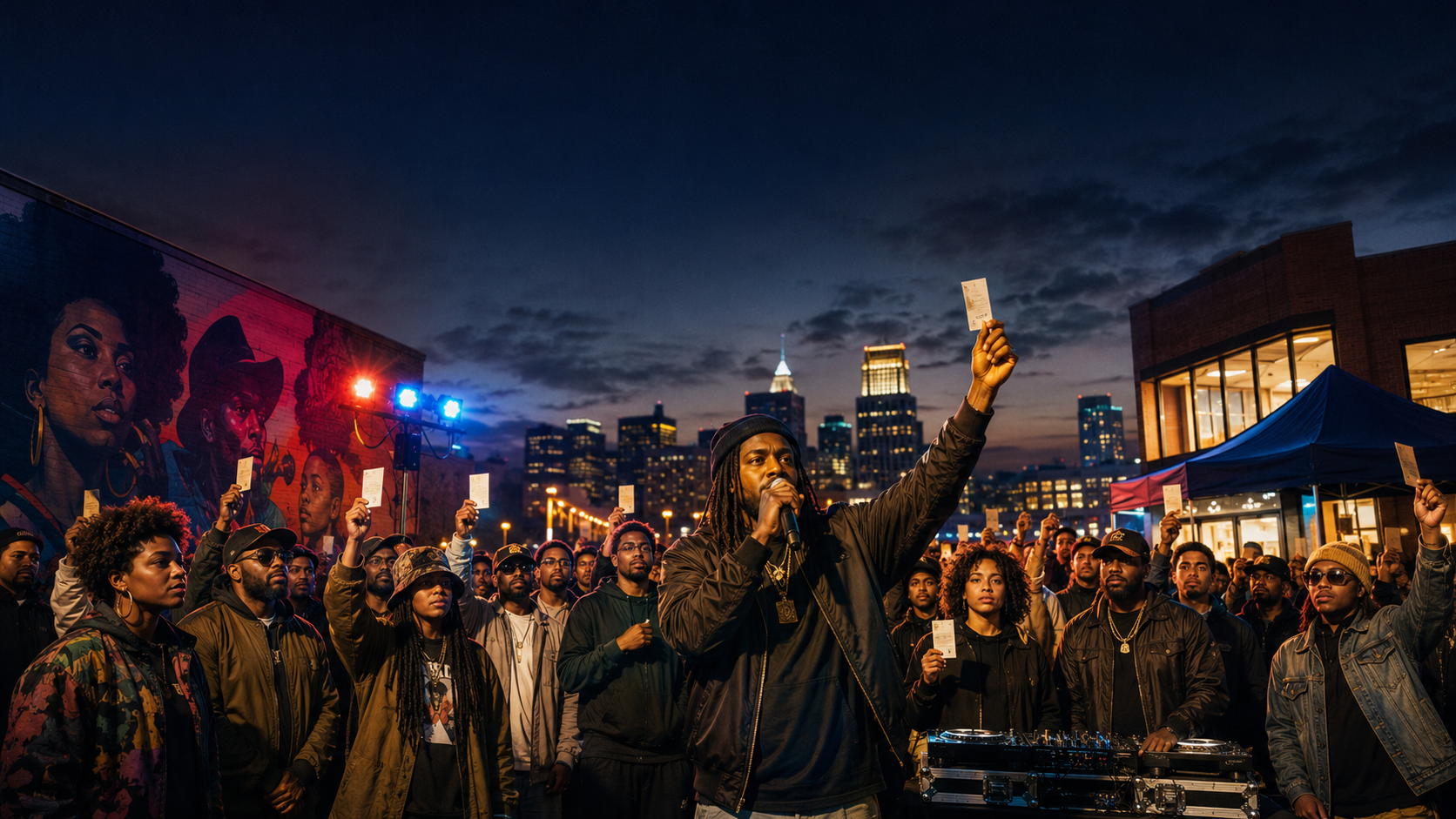
The hip-hop community has a powerful voice in America. Hip-hop is no longer just music. It is a culture, a way of life and one of the most influential ways to reach the masses.
From its beginning, hip-hop has told stories about poverty, policing, inequality, racism and survival. It gave a microphone to communities that were frequently ignored by politicians and the mainstream media. Today, its influence extends into business, fashion, sports, entertainment and politics.
That influence carries a responsibility—especially as America approaches the 2026 midterm elections.
America made its choice
When Donald Trump returned to the White House, the country made a choice. Many Black Americans who had spent years organizing, protesting and working to protect democracy understandably felt exhausted.
For generations, Black communities have been expected to stand at the front of every national struggle. We have marched, organized, registered voters and fought for rights that ultimately benefited the entire country. After the 2024 election, some people decided to step back and let America experience the consequences of its decision.
The country chose Trump. It chose his leadership, his policies and the Republican officials who continue to support him.
Now Americans must examine the results and decide whether they are satisfied.
Have families become more financially secure? Is healthcare becoming more accessible? Are constitutional rights safer? Is the country more united? Do people trust the government and justice system more than they did before?
Those questions should matter more than campaign slogans.
The 2026 midterms are a national checkpoint
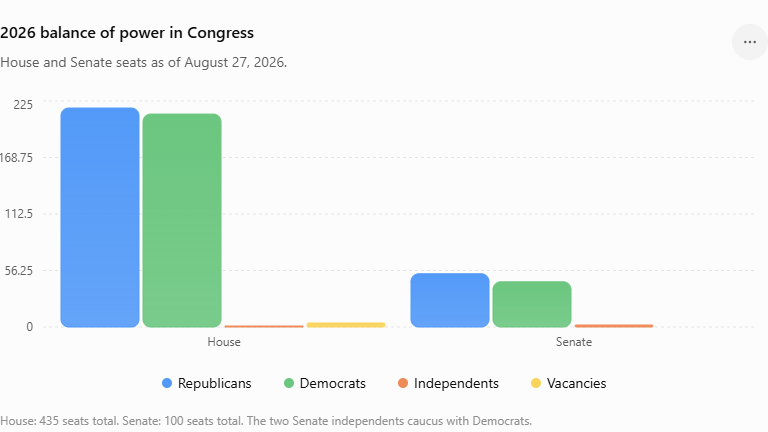
| Chamber | Republicans | Democrats | Independents | Vacancies | Total seats |
|---|---|---|---|---|---|
| House of Representatives | 218 | 212 | 1 | 4 | 435 |
| Senate | 53 | 45 | 2 | 0 | 100 |
The 2026 midterms will determine control of the House of Representatives and potentially the Senate. Every voting seat in the House and approximately one-third of the Senate will be contested.
As of August 27, 2026, Republicans hold 218 House seats, compared with 212 Democrats and one independent, with four vacancies. Republicans also hold 53 Senate seats, while Democrats hold 45 and two independents caucus with Democrats. Those narrow margins mean that a relatively small number of elections could change the balance of power. House Press Gallery and U.S. Senate.
Control of Congress determines far more than which party receives the most television coverage. It affects which legislation receives a vote, how federal money is spent, which agencies are investigated and whether a president’s agenda advances without meaningful resistance.
A change in congressional control would not instantly repair the country. Presidents retain substantial executive authority, and major legislation can face procedural obstacles. Nevertheless, Congress can investigate abuses, control funding, conduct oversight and force public votes on policies that might otherwise proceed without serious resistance.
The contradiction at the center of Republican policing
One of the most important issues in this election is criminal justice and public safety.
Black communities frequently face two legitimate concerns at the same time: we want protection from violence, but we also want protection from unequal or abusive policing. These goals are not contradictory.
People should be able to call the police when they are in danger without fearing that they—or a family member—could become the next victim. Police officers should be able to perform their duties safely, but they must also be accountable when they violate the law or the Constitution.
The 2026 debate, therefore, cannot be reduced to being “pro-police” or “anti-police.” The real question is whether the government can protect communities while applying the law equally.
This is where President Trump and the Republican Party face a serious credibility problem.
Republicans regularly present themselves as the party of law, order and respect for police. Yet on January 20, 2025, Trump granted sweeping clemency to people charged with or convicted of offenses connected to the January 6 attack on the Capitol. The proclamation directed the Justice Department to dismiss pending cases and granted pardons or commutations covering approximately 1,500 defendants. White House proclamation.
Some of those cases involved violence against police officers.
How can political leaders demand harsh consequences for people accused of confronting police in one community while excusing their political supporters for assaulting officers at the United States Capitol?
If attacking police is wrong, it should be wrong regardless of the attacker’s race, political affiliation or loyalty to a president. “Back the Blue” cannot be treated as a principle in one situation and discarded when it becomes politically inconvenient.
That is not equal justice. It is selective law and order.
Questions surrounding ICE recruitment
There have also been serious questions about whether the Department of Homeland Security’s recruiting campaign has attempted to appeal to people connected to January 6 and far-right groups.
However, this point must be stated accurately: it has not been publicly established that ICE hired January 6 defendants as agents. In January 2026, congressional Democrats demanded records after alleging that recruitment material appeared designed to attract pardoned January 6 participants and extremists. Reporting at the time said it remained unclear whether any former defendants had actually been hired. CBS News.
That distinction does not eliminate the need for investigation. It makes transparency even more important.
Americans deserve to know who is being recruited into powerful federal law-enforcement agencies, how applicants are screened and whether anyone who participated in political violence is being entrusted with authority over other people.
These questions are especially urgent because Congress has approved an enormous expansion of immigration enforcement. Such agencies possess the power to detain people, separate families and use force. Every agent should therefore be subjected to careful background checks, training and meaningful oversight.
Law enforcement cannot become a political weapon
No president—Republican or Democrat—should be permitted to transform federal law enforcement or the military into a personal instrument of political power.
Police officers swear an oath to the Constitution, not to one president. Members of the military defend the country, not a political party. Immigration agents enforce laws; they should not be used to intimidate political opponents or entire communities.
This concern extends beyond Black Americans. Migrants, immigrants, religious minorities, protesters and political dissidents can all become vulnerable when government power operates without sufficient accountability.
Black history teaches us to pay attention when leaders divide the country into groups that deserve protection and groups that deserve punishment. Government power rarely remains confined to its original target.
A system capable of abusing one community can eventually be turned against many others.
What real public safety should include
Public safety is not created by slogans, mass arrests or military-style displays of force. It requires a serious, comprehensive strategy.
Voters should examine candidates’ plans for:
- Preventing violent crime
- Holding police officers accountable for misconduct
- Stopping illegal gun trafficking
- Creating fair sentencing policies
- Supporting people returning from incarceration
- Enforcing federal civil-rights protections
- Expanding mental-health and substance-use treatment
- Investing in neighborhoods affected by violence
- Protecting witnesses and crime victims
- Building trust between residents and law enforcement
The test is not whether a politician sounds tough. The test is whether the policy makes people safer while respecting constitutional rights.
A government that ignores neighborhood violence fails its citizens. A government that uses discriminatory or unconstitutional force also fails them. Americans should reject the false choice between safety and justice because lasting public safety requires both.
The consequences extend beyond policing
Criminal justice is the central issue, but it does not exist in isolation.
Healthcare cuts affect whether low-income families can visit doctors or receive medication. Reductions in mental-health and addiction services can increase homelessness, emergency-room visits and encounters with police. Cuts to education, employment and neighborhood programs can make it harder to prevent crime before it happens.
The ongoing conflict with Iran also demonstrates why congressional control matters. The House voted in July 2026 to restrict Trump’s war powers, but the Senate blocked its corresponding measure. The dispute centered on whether military action could continue without explicit congressional authorization. Reuters.
Americans are paying for these decisions through taxes, military commitments and higher economic uncertainty. Congress has a constitutional responsibility to debate war, government spending and the use of presidential power.
Blind party loyalty cannot replace that responsibility.
Republicans must be judged by their actions
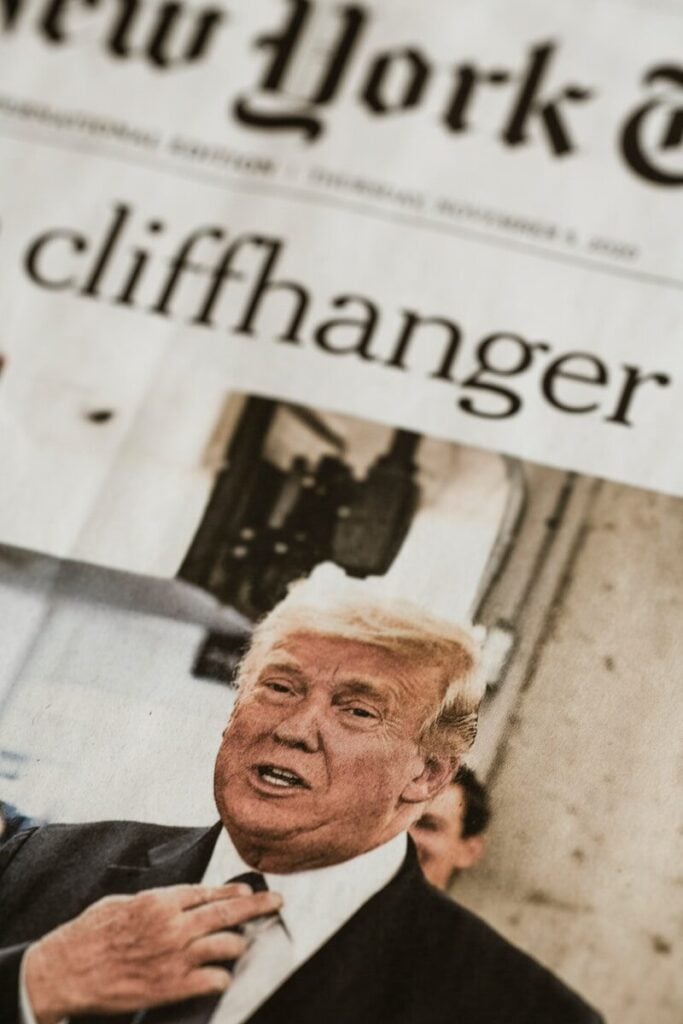
Donald Trump is the undisputed leader of today’s Republican Party. Republican officials may occasionally criticize him, but most ultimately support his agenda or remain silent when speaking out could threaten their political careers.
That makes the 2026 election a judgment not only of Trump but also of the members of Congress who have enabled him.
Republicans say they support law enforcement, but many defended pardons for people involved in an attack that injured police officers.
They say they oppose government overreach, but they support expanding federal enforcement power.
They say they believe in fiscal responsibility, but they approve enormous spending increases for enforcement and war while seeking reductions in programs serving poor and vulnerable Americans.
They say they defend freedom, but they support policies that restrict reproductive choices and weaken protections for communities whose political influence has historically been suppressed.
These contradictions deserve greater scrutiny than political branding.
Hip-hop must demand answers
Hip-hop should not become an advertising department for any political party. Democrats should not receive unconditional support simply because they are not Republicans. Every candidate asking for trust must earn it.
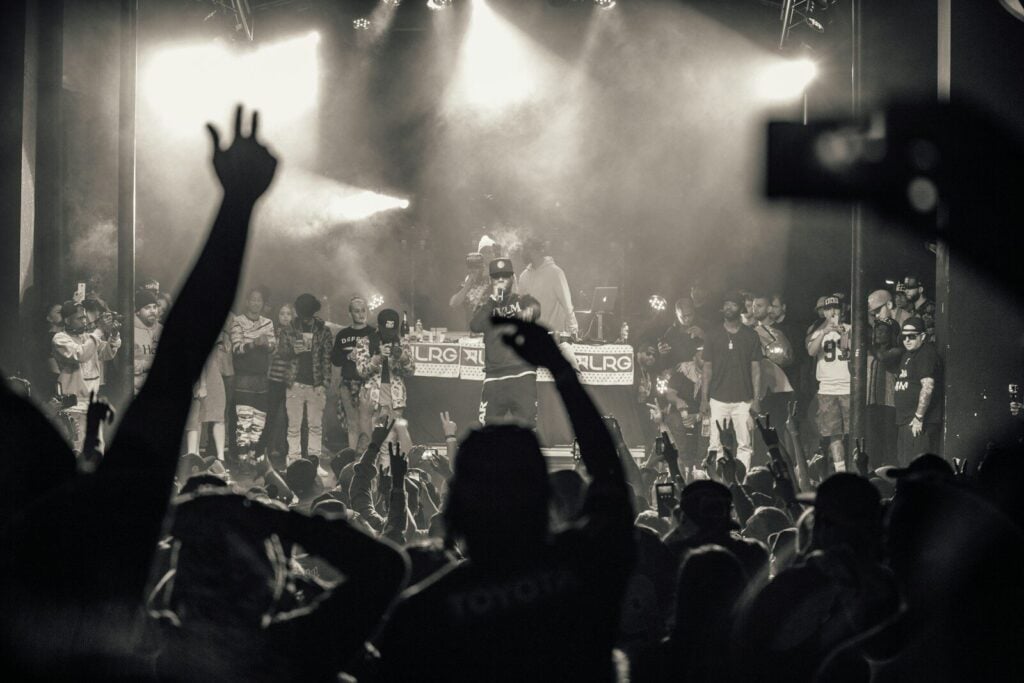
Artists, producers, podcasters, DJs, athletes and cultural leaders should use their platforms to ask difficult questions:
- What has the candidate actually voted for?
- Does the candidate support equal accountability under the law?
- How will the candidate prevent violent crime?
- What is the plan for police misconduct?
- Will the candidate protect voting access?
- How will federal policies affect working families?
- Does the candidate defend constitutional limits even when politically inconvenient?
- Is the candidate offering measurable policies or merely repeating slogans?
Celebrity endorsements are not enough. Photo opportunities are not enough. A candidate appearing beside a rapper does not prove that the candidate understands—or intends to help—the communities that created hip-hop.
The culture should demand policies, timelines and accountability.
Now America must decide
The 2026 midterms present the country with an opportunity to place meaningful limits on presidential power and reconsider the direction of the nation.
Putting Congress under Democratic control would not automatically solve every problem. Democrats would still need to prove that they can govern, protect communities, defend constitutional rights and deliver measurable improvements. They should be held accountable rather than treated as entitled to anyone’s vote.
But voters must confront the record before them.
Can a political movement that excuses attacks on police when committed by its supporters honestly claim to represent law and order? Can leaders who demand unchecked enforcement power be trusted to use that power equally? Can officials who consistently place loyalty to one man above independent judgment be trusted to defend the Constitution?
Hip-hop has always spoken when institutions failed the people. In 2026, its role should be to inform, question, organize and demand the truth.
This is larger than music. It is larger than one election or one political party. It is about whether America will be governed through equal justice and constitutional accountability—or through selective enforcement, fear and political loyalty.
The country made its choice in 2024. In 2026, Americans will have an opportunity to judge the consequences and choose again.
Latest Articles
- Hip-Hop Must Speak Up: Why the 2026 Midterms Are About Justice, Safety and SurvivalThe hip-hop community has a powerful voice in America. Hip-hop is no longer just music. It is a culture, a way of life and one of the most influential ways…
- Trump Plan to Cut Federal Workforce : Why Critics Are Sounding the AlarmThe push to cut the federal workforce is being sold as bold leadership and fiscal responsibility—but when you actually break down the numbers, it starts to look more like political…
- Jay Z & Roc Nation Got This One Wrong: Battle Rap Still Moves the CultureWhen jay z nation starts acting like battle rap is some dirty part of hip-hop we should leave behind, I gotta push back. Nah. That take is too soft, too…
- Nick Cannon Said Democrats Are the Party of the KKK. Here’s What History Really SaysNick Cannon stirred backlash after saying Democrats are “the party of the KKK,” agreeing with Amber Rose on a March 2026 episode of Big Drive, and adding that Republicans were…
- Iran’s New Demand Could Reshape the End of the WarIran has a new demand to end the war and it should not be brushed off or ignored. It is a clear warning that this whole situation is getting worse,…